

Stepping into Morocco during AFCON 2025, one thing was immediately clear: this was no ordinary tournament. This was a high-stakes dress rehearsal for the 2030 World Cup, a nation stress-testing its global ambitions on a continental stage. For most of the event, Morocco delivered a masterclass, showcasing world-class infrastructure and an atmosphere that redefines “home advantage.” But in a chaotic final act, a critical flaw was exposed — one that must be fixed before the world arrives in 2030.
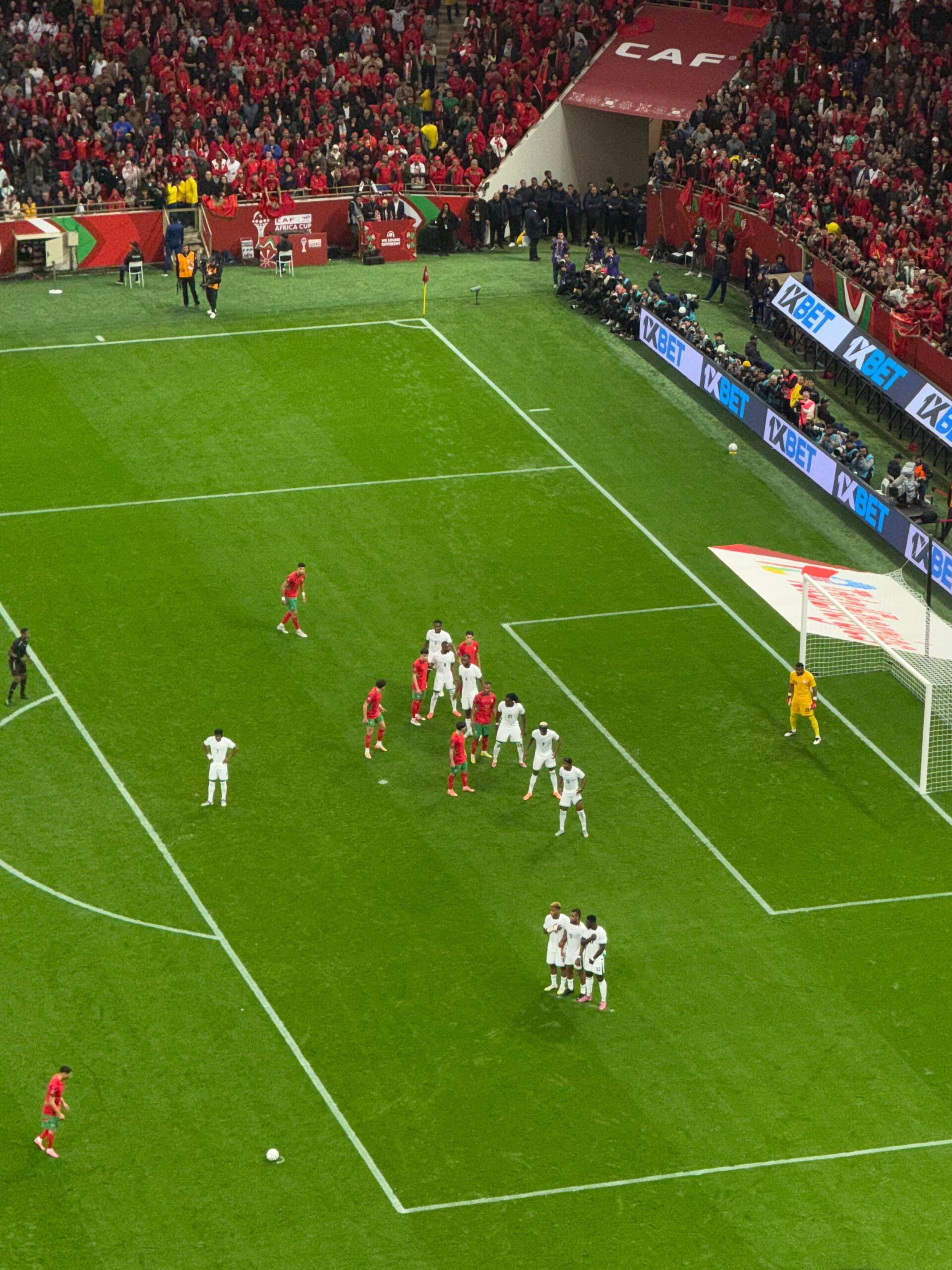
The Infrastructure Masterclass
Operationally, Morocco didn’t just host; it rewrote the manual dismantling the clichés of African operational and logistical hiccups. This was seamless, modern hosting that turned a continental championship into a cohesive national celebration.

The foundation was impeccable. The pitches held firm under winter rains — a historic AFCON problem solved. The crown jewel, Rabat’s 69,500-seat Prince Moulay Abdellah Stadium, is an architectural marvel that wouldn’t look out of place in the Champions League final. Teams experienced punctual travel and top-tier facilities, allowing the football to shine without operational distraction.
Beyond the stadiums, Morocco understood the modern fan. The fan zones in Marrakech pulsed not just with football, but with concerts from international stars like Davido, Odumodublvck, Burna Boy and French Montana, blending sport and culture into a 24/7 festival. This was a complete blueprint for a mega-event.
The 12th Man: A Sound Like No Other
All the infrastructure in the world is meaningless without soul. And here, Morocco delivered something that changed my understanding of football atmosphere.
As a Liverpool fan, I’ve felt the “You’ll Never Walk Alone” chorus vibrate in my chest on European nights. I’ve stood in the swirling cauldron of San Siro. I thought I knew what a crowd could do.
I knew nothing.
The semi-final in Rabat was an education in psychological warfare. From Nigeria’s first warm-up touch, a seething, unified whistle — the sound of 65,000 kettles screaming at once — attached itself to every green-and-white shirt. This wasn’t sporadic booing; it was a relentless, 120-minute sonic siege that never stopped, not for a single second. It was the most effective, intimidating display of home advantage I’ve ever witnessed.
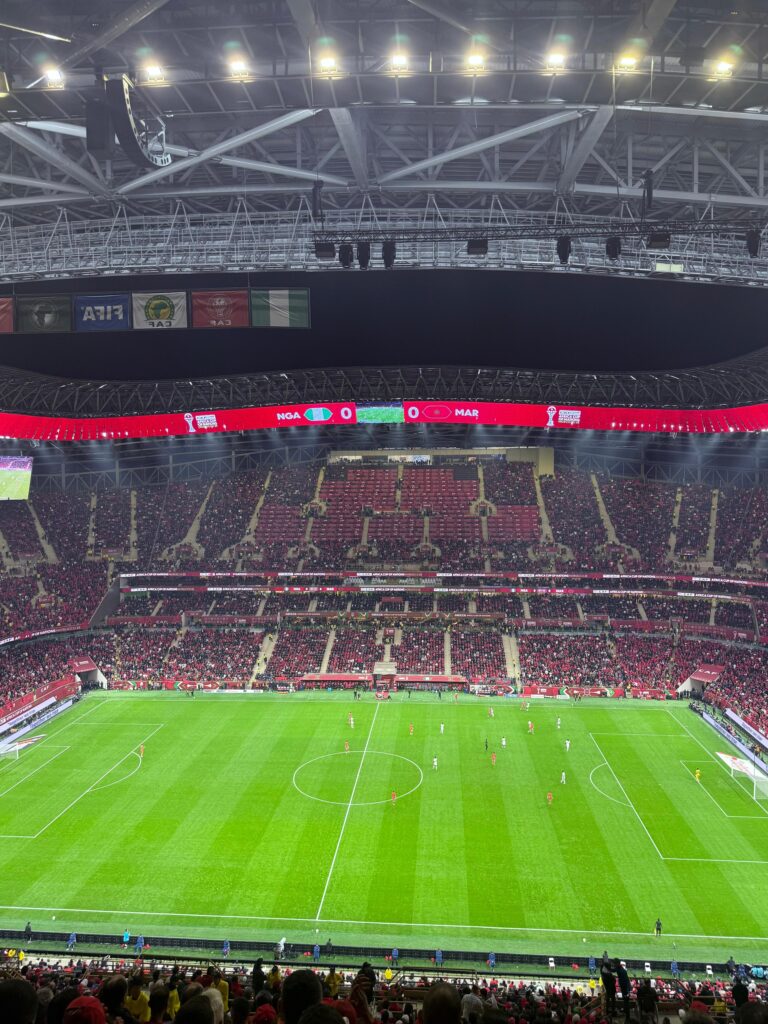
The beautiful paradox was the sportsmanship that framed this ferocity. As one of perhaps 500 Nigerian fans in that red sea, I braced for hostility. Instead, walking to my seat with my Nigerian flag draped across me, I was greeted with jeers and smiles. After Morocco’s win, hoarse, celebrating fans sought us out for handshakes and photos. “Bravo…Your team is strong,” one said sincerely. The hostility was purely for the contest — a pure, powerful tribalism that Morocco will weaponize in 2030.
The Cracks in the Facade
Yet beneath this glossy surface, a narrative of perceived favouritism simmered. It detonated in the final’s dying moments when a contentious last-minute penalty was awarded to Morocco, minutes after Senegal had a goal controversially ruled out.
What followed was an operational collapse. Security protocols evaporated as play came to a halt. In an unprecedented act of protest, the entire Senegalese team walked off in protest and for 16 agonizing minutes, Africa’s showpiece final hung in chaotic limbo, broadcasting shameful disorder to the world.
This was more than a refereeing controversy. It was a catastrophic failure in crisis management — a stark revelation that Morocco’s impeccable “hardware” meant nothing without the “software” of trained human response and decisive command under extreme pressure.
The Verdict for the World Cup 2030
The bottom line is clear: Morocco proved it has the stadiums, transport, and economic model to co-host a brilliant World Cup. The atmosphere its fans generate will be electrifying, potentially the tournament’s best.
But the final was a crucial warning. A World Cup carries infinitely more pressure, scrutiny, and geopolitical tension. The lesson for 2030 is stark: brilliant venues are not enough. Mastering impartial officiating, ironclad security, and decisive crisis protocol is equally vital.
Morocco built a stunning stage for AFCON. For the World Cup, it must prove it can control the show when the script is torn up and the whole world is watching. They have the foundation. Now they must build a system as resilient under pressure as their fans are relentless.
Bring on 2030.
Follow Tayo on Instagram @wearehumansfirst_ for more fan-first content & opinion.

FPL Gameweek 8 Analysis: Superb Weekend After Wondrous Wildcard
I was umming and arring last week over whether to pull the trigger on my first FPL wildcard this early…

Tipping Record
Here is a comprehensive Tipping Record for every selection ever put up on For Foot Sake. Football Tipping Record 2026…

Tommy the Punter’s Weekend Tips: Cherries to Pop Carrick’s Tenure at Old Trafford as Melbourne Derby Tips Towards a Stalemate
Been a fantastic week. My two A-League tips won last weekend thanks to my time honoured system of backing New…